JavaScript · Track 2 · Tutorial 2 of 4
Check a chart before you send it
Ask BrizoConsol whether a chart is well formed before you send it - nothing is written, and every problem comes back with the record it's in.
1When a check is worth it
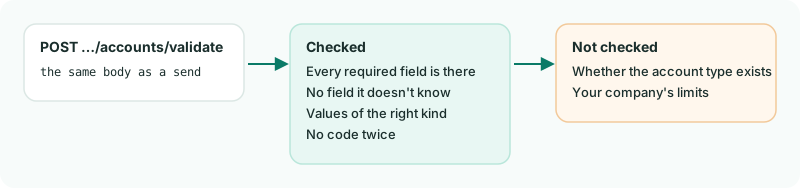
Before you point your code at a real company, you can ask BrizoConsol whether a payload is well formed - without writing anything. Add /validate to the address and send the same body.
2Check a chart with a mistake in it
Create check-chart.mjs. Its second account has no name:
check-chart.mjs
// check-chart.mjs - checks a chart before sending it. Nothing is written.
import { call, companyId } from './brizo.mjs';

const answer = await call('POST', `/organisations/${companyId}/accounts/validate`, {
    declarations: { source_reference: 'my-ledger' },
    records: [
        { code: '7000', name: 'Bank charges', type: 'Expense' },
        { code: '7100', type: 'Expense' }, // no name
    ],
});

if (answer.status === 200) {
    console.log(`Valid: ${answer.body.accepted} records would be accepted.`);
} else {
    console.log('Not valid:');
    for (const error of answer.body.errors) {
        console.log(`  record ${error.records_index}: ${error.field} - ${error.code}`);
    }
}
3Run it
node check-chart.mjsCheck
Not valid:
  record 1: name - required_field_missing
Record 1 - the second record, counting from 0 - has no name. Add a name and run it again, and it answers Valid: 2 records would be accepted.
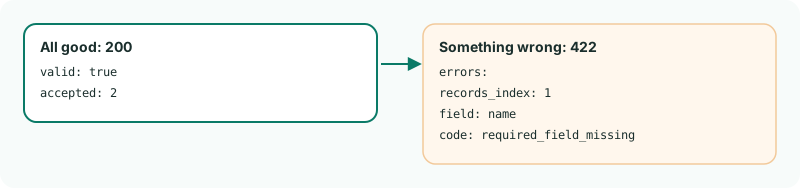
200 with how many records would be accepted, or 422 with each problem.4What a check can't tell you
A check looks at each record's shape. It doesn't look up whether the account type exists or whether the company has room for more accounts: those are only known when you send. And it writes nothing - a check is never a substitute for sending.